What kind of website does your business really need?
A website can be a simple online business card, a lead-generation tool, a shop, a booking system or the operating centre of a company. The fact that all of this can be built does not mean all of it should be built.
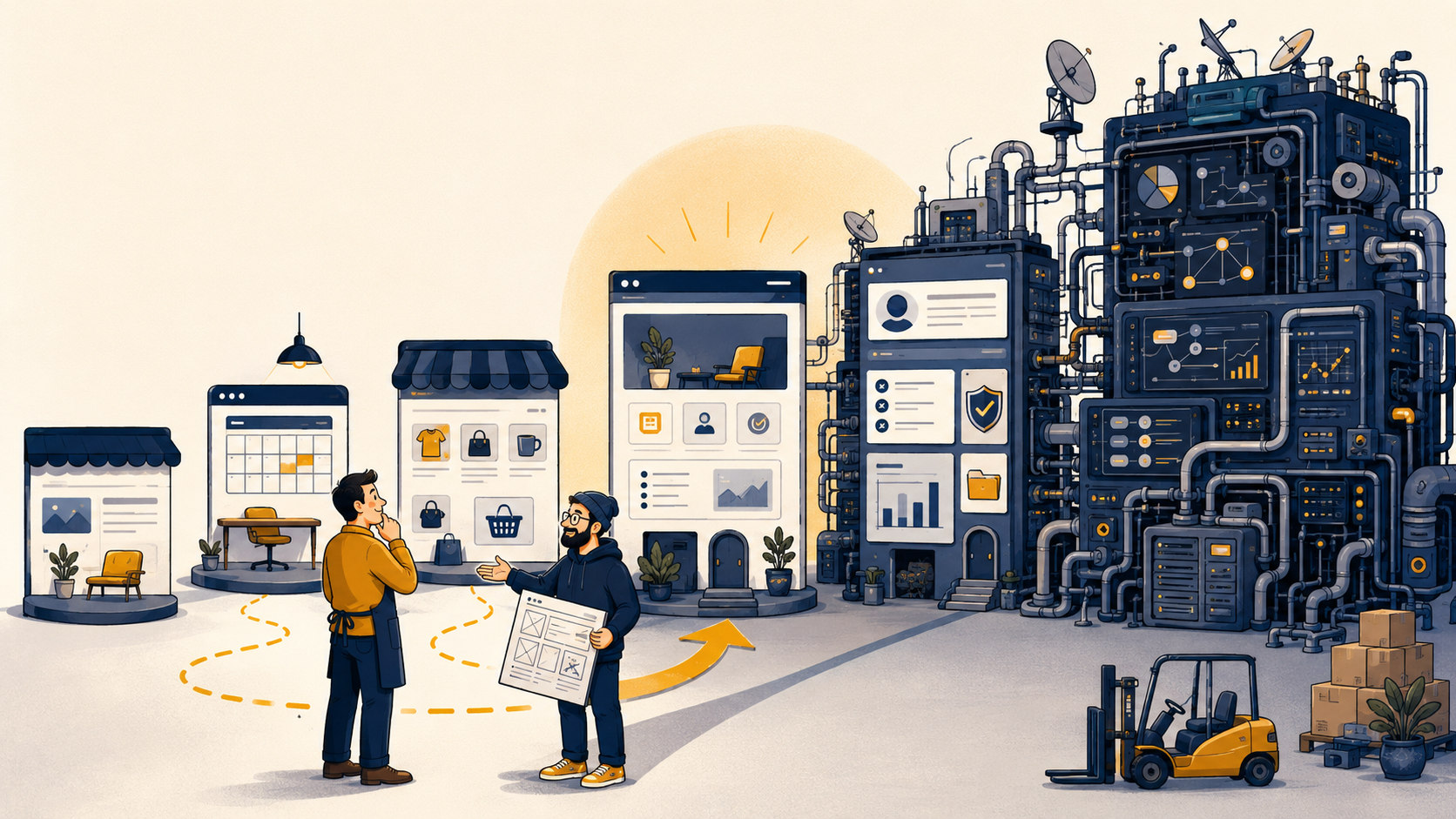
“I need a website” sounds precise, but it is rather like saying “I need a vehicle.” That could mean a bicycle, a family car, a delivery van or a refrigerated truck. They all have wheels; they do not solve the same problem.
Two businesses may both ask for a “simple site.” One needs a phone number, services and a few photographs. The other gradually adds bookings, payments, three languages, customer accounts and automated messages. Before discussing colours and price, it helps to see the full range and deliberately choose the smallest version that will do the real work.
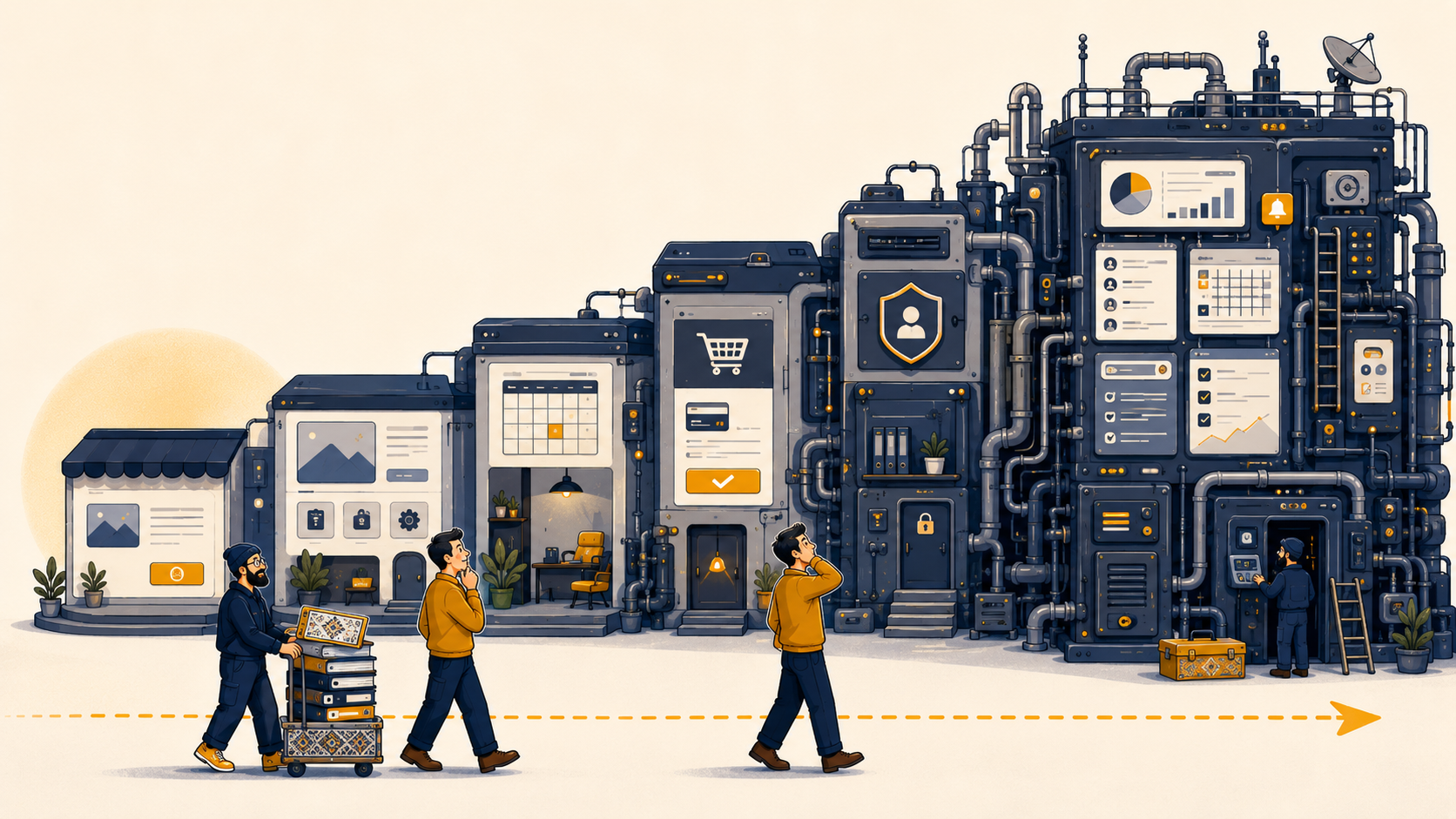
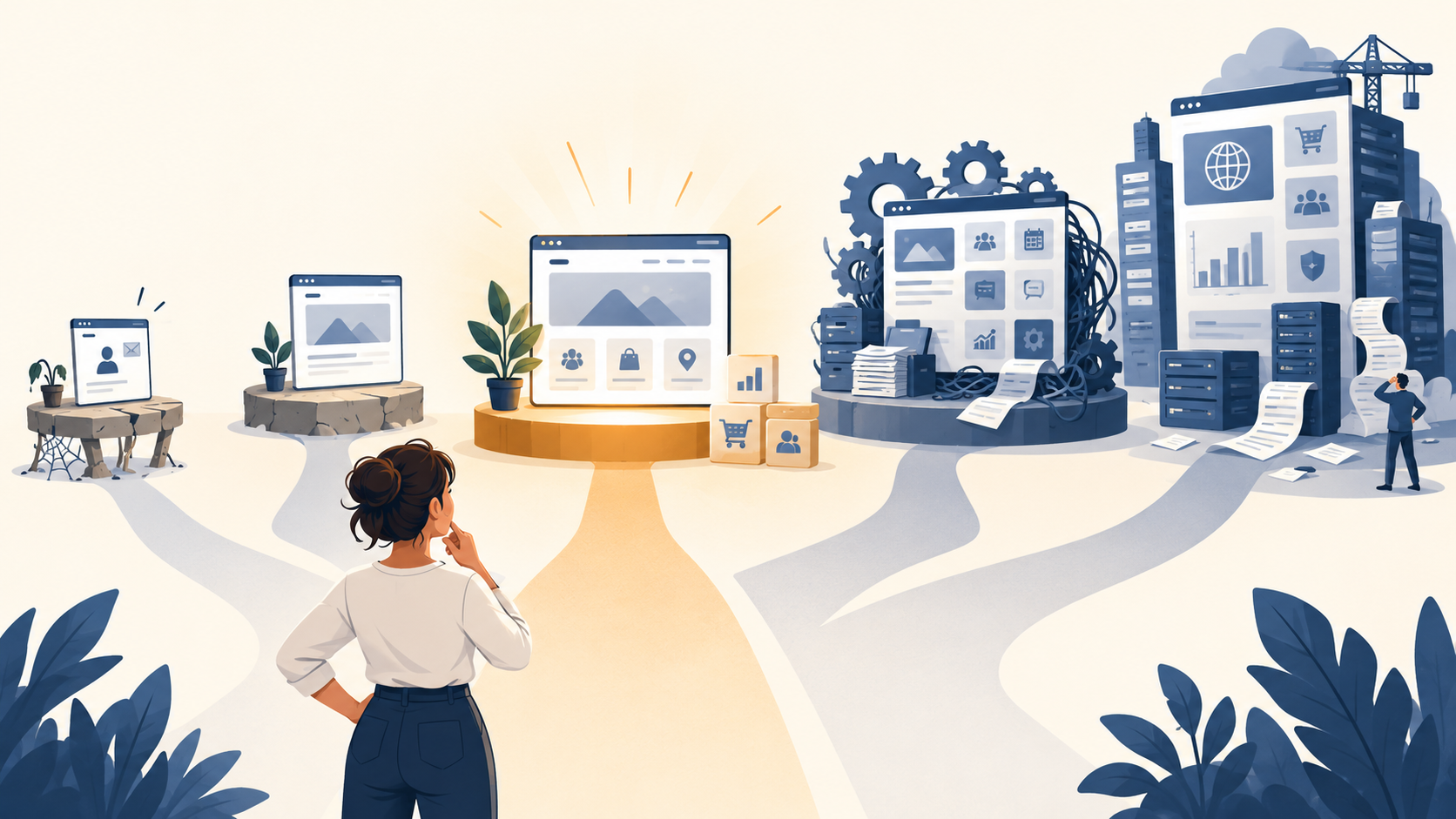
Six levels of an online business presence
1. Business card
Explains who you are, what you do, where you work and how to contact you.
2. Lead generator
Uses focused service pages, proof and clear calls to action to bring in suitable enquiries.
3. Time saver
Takes over repetitive work with bookings, tailored forms, downloads and automated replies.
4. Online sales
Lets customers choose, pay and receive confirmation or fulfilment information.
5. Customer portal
Gives each customer access to orders, documents, status updates or services.
6. Business system
Connects customers, staff, data, integrations, reports and automated processes.
At the upper end, it is no longer just a website. It is a web application designed around the company’s operations. The problem is rarely a lack of possibilities; it is how easily a list of possibilities starts pretending to be a list of needs.

Bring the decision back to earth
Most small businesses do not need a complete system. They need visitors to understand the offer, recognise that it fits their situation, see credible evidence and contact the company without friction. A focused service website with genuine photographs, basic search visibility and low-maintenance foundations often delivers more value than a complicated platform.
Level 1: exist professionally online
This suits a new business, local tradesperson, freelancer or company that wins most work through referrals. One well-built page or a few clear pages can establish trust. A blog, dashboard or booking engine is not automatically required.
Level 2: attract specific enquiries
When the site should actively win work, each priority service deserves a useful explanation, evidence and a clear next step. The enquiry form can ask for the few details needed to qualify and answer the request.
Level 3: reduce repetitive work
Bookings, document uploads, preliminary calculators and automated confirmations are worthwhile when they remove a real repeated task. Automation should save time for customers and staff, not move hidden administration onto the owner.
Level 4: sell or run a process online
Payments, accounts and integrations introduce more responsibility: data, access, failure handling, refunds, support and ongoing maintenance. They make sense when the volume or customer experience justifies that responsibility.
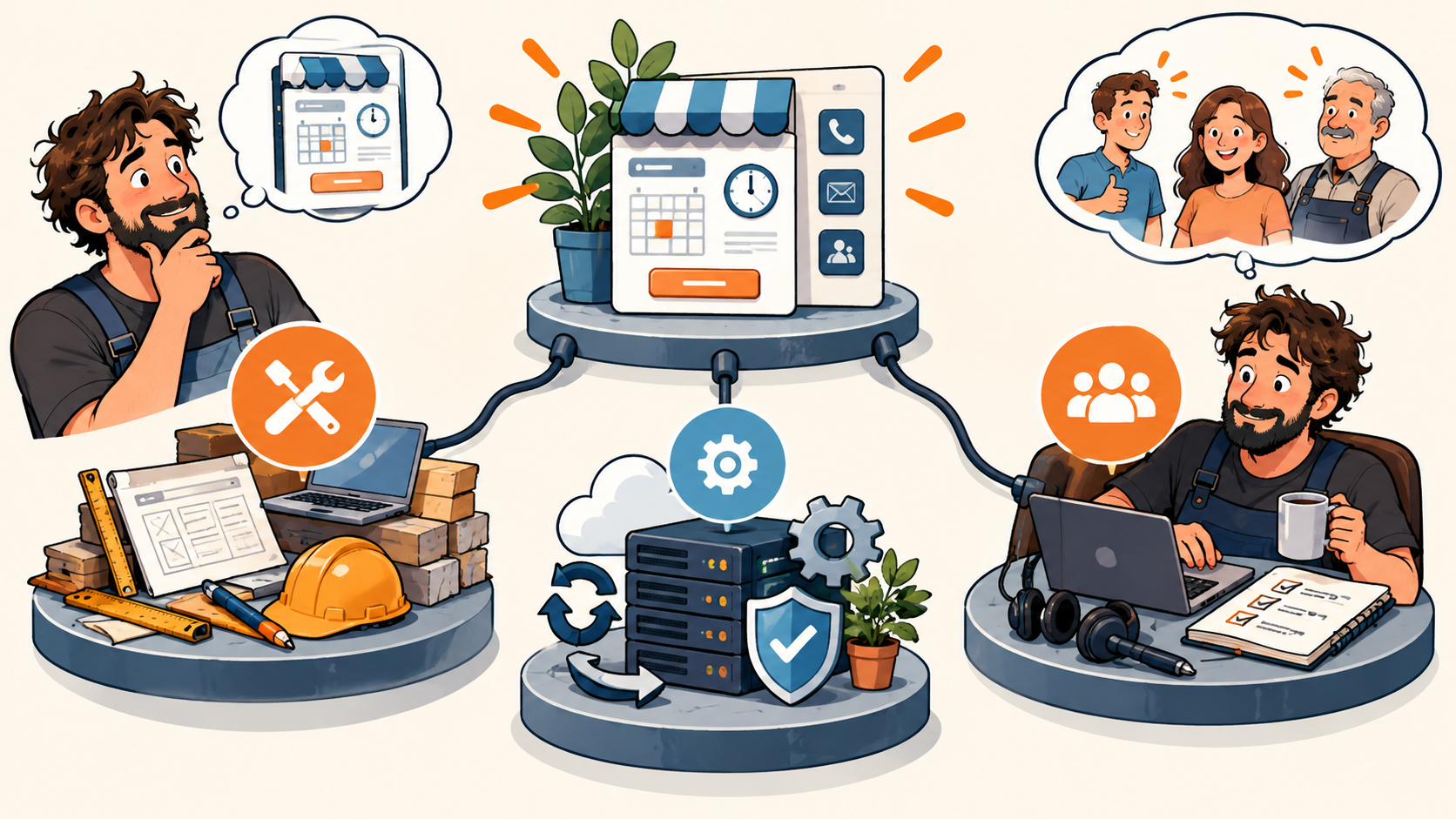
Every feature has three prices
1. The cost to build it
Design, implementation, configuration, content, testing and launch.
2. The cost to maintain it
Subscriptions, technical updates, monitoring, backups and changes to connected services.
3. The cost to operate it
The time someone spends reviewing requests, managing products, answering failures and keeping information current.
A feature is not free merely because it is included in a platform. It may still create a permanent job for someone in the business.
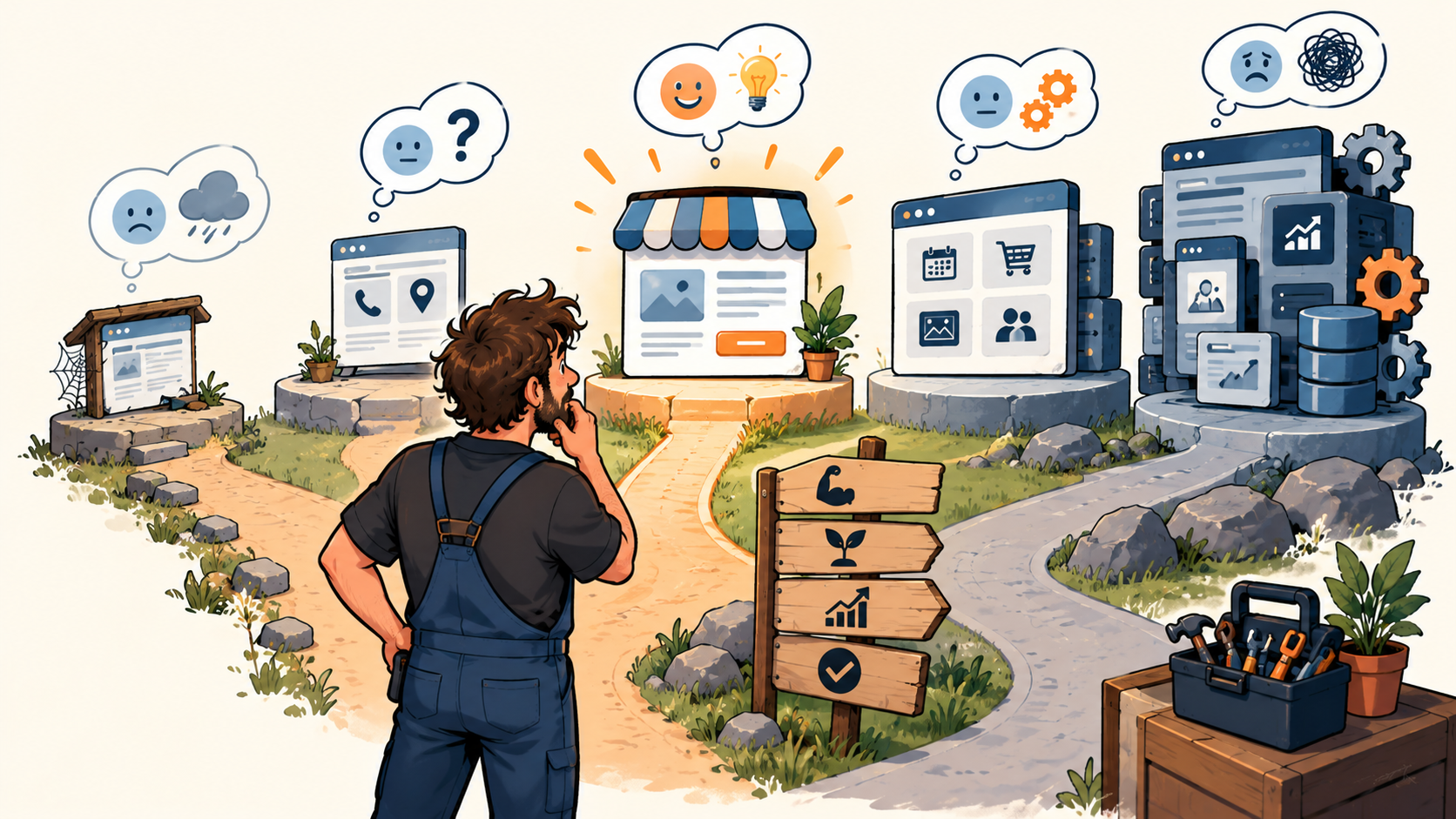
Start with the problem, not the feature list
“We need a live chat” may really mean “customers cannot find the right service.” “We need accounts” may mean “clients repeatedly ask for the same documents.” “We need a quote calculator” may mean “the team wastes time on enquiries outside its area.” State the operational problem first, then compare the simplest credible solutions.
What about AI website builders?
An AI generator can produce a useful first version quickly when the business already has clear answers, modest requirements and someone who can verify the result. It does not remove decisions about positioning, content, ownership, accessibility, analytics, privacy, integrations or maintenance.
The right question is not “Can AI build a page?” It can. The better question is “Who makes sure this page represents the real business and keeps working after the demo?”
How to recognise the right level
- Write down the single most important action a visitor should take.
- Name the services you genuinely want to sell more often.
- List repetitive tasks that cost the team measurable time.
- Separate launch requirements from ideas that can wait.
- Decide who will own accounts, content and ongoing costs.
Signs the project is too small
Important services are hard to explain, visitors cannot provide the information needed for a quote, or staff still repeat work the site could reliably handle.
Signs it is becoming too large
Features have no owner, the maintenance model is unclear, launch keeps moving because of “nice to have” ideas, or the proposed system is more complex than the business process itself.
Conclusion: do not buy the biggest website
Buy the smallest one that solves today’s important problem without blocking sensible growth. A clear business site can be an excellent result. A custom system can also be right. Quality lies in matching scope to the work the company actually needs done.
Unsure where a website ends and a system begins?
Describe the customer journey and the repetitive work in your business. MartynForge can separate what is useful now from what should remain a future option.
Contact MartynForge