
PNG or SVG logo? What you are really buying and why the price differs
On a screen, two logo files can look identical. The difference appears when you need to enlarge the logo, print it, edit it, put it on a vehicle or hand it to another designer.
You can buy a logo online for a few euros, generate one yourself in minutes, or commission a project costing hundreds or even thousands. All of these products are called a “logo”, but they do not always contain the same thing.
Sometimes a small business only needs a clean mark for its website and social profile. Sometimes that same mark will later appear on vans, workwear, invoices, signage, printed material and several versions of a website.
Not every company needs a complete visual identity on day one. Every company should, however, know whether it is buying a finished image for immediate use or a logo system that is prepared for years of reuse.
First things first: what are PNG and SVG?
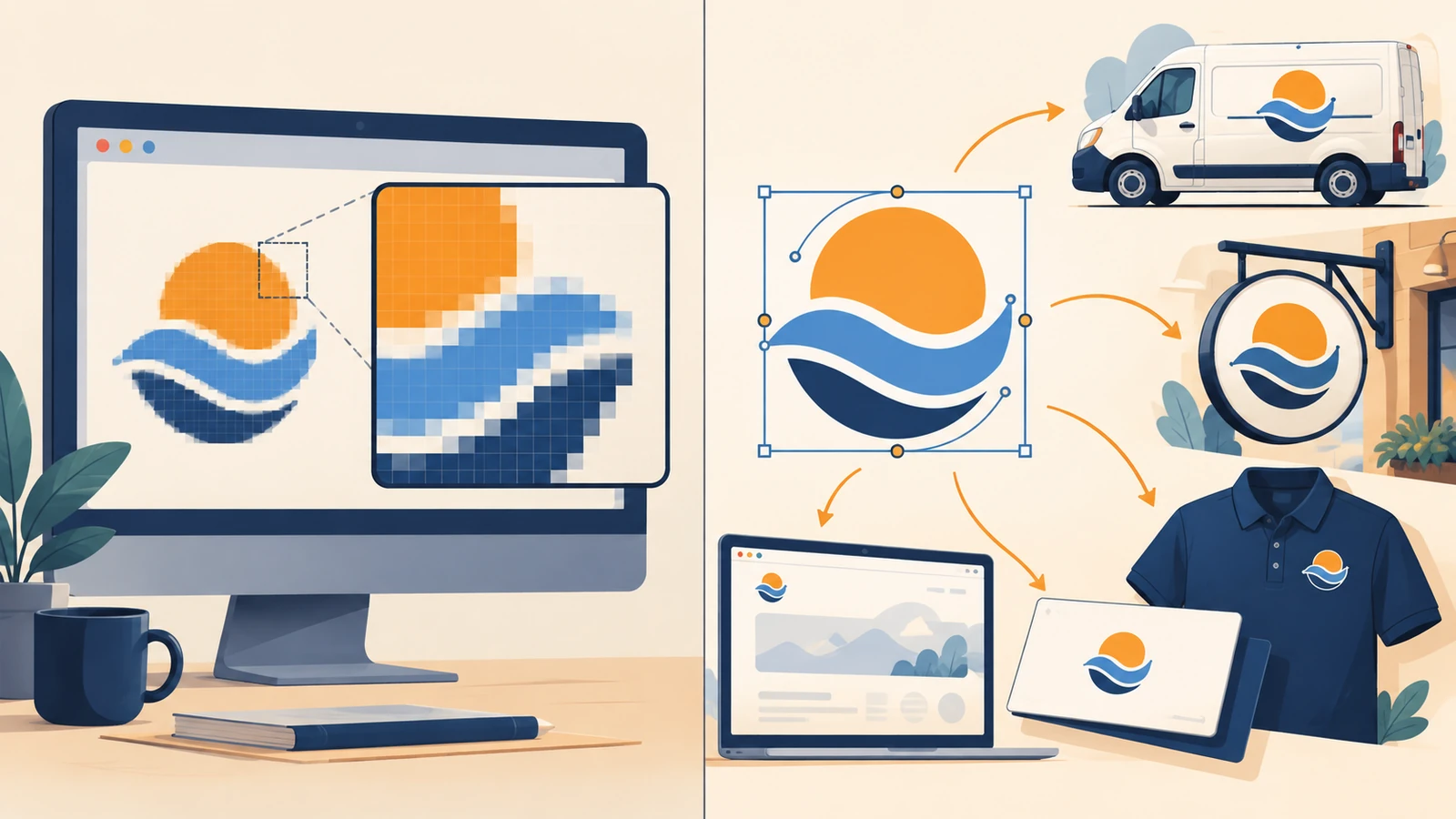
PNG and SVG are two different graphics formats. To a normal user they can display exactly the same logo, but they store that image in very different ways.
PNGA finished image
PNG stores the logo as a grid of coloured pixels.
- it has a defined pixel size;
- it can have a transparent background;
- it is easy to use on websites and social media;
- it loses sharpness when enlarged too far.
SVGDrawing instructions
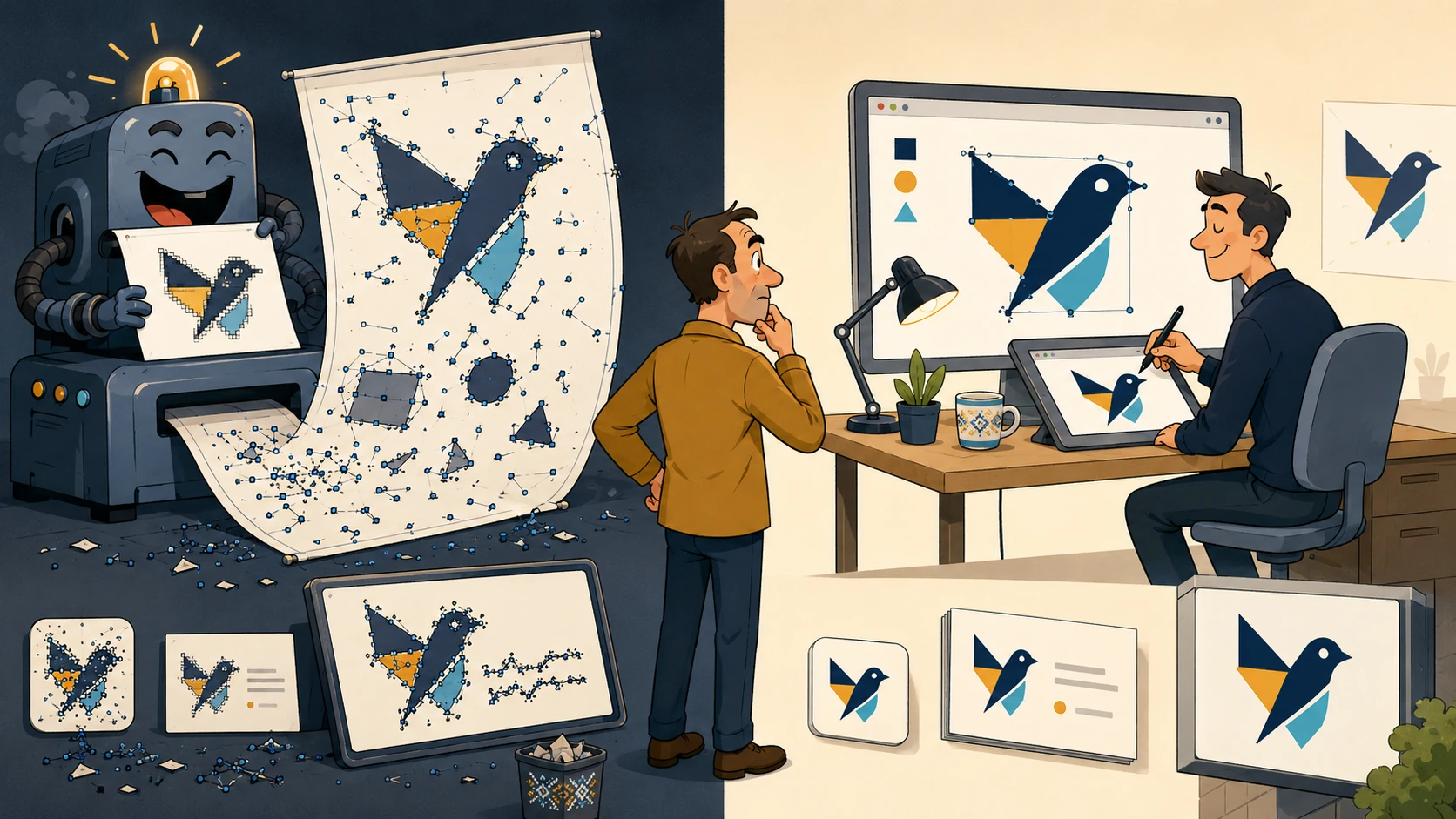
SVG stores shapes, lines and curves that the computer can redraw at any size.
- it stays sharp when enlarged;
- colours and elements are easier to edit;
- it works as a source file for further design work;
- other formats can be exported from it.
PNG is like a photograph of the finished logo.
SVG is more like a set of instructions saying: “draw this shape exactly this way”.
When you enlarge a PNG, the computer also enlarges the stored pixels. Edges can become soft, blurred or jagged. When you enlarge an SVG, the shapes are simply drawn again at the new size.
What does “vector” actually mean?
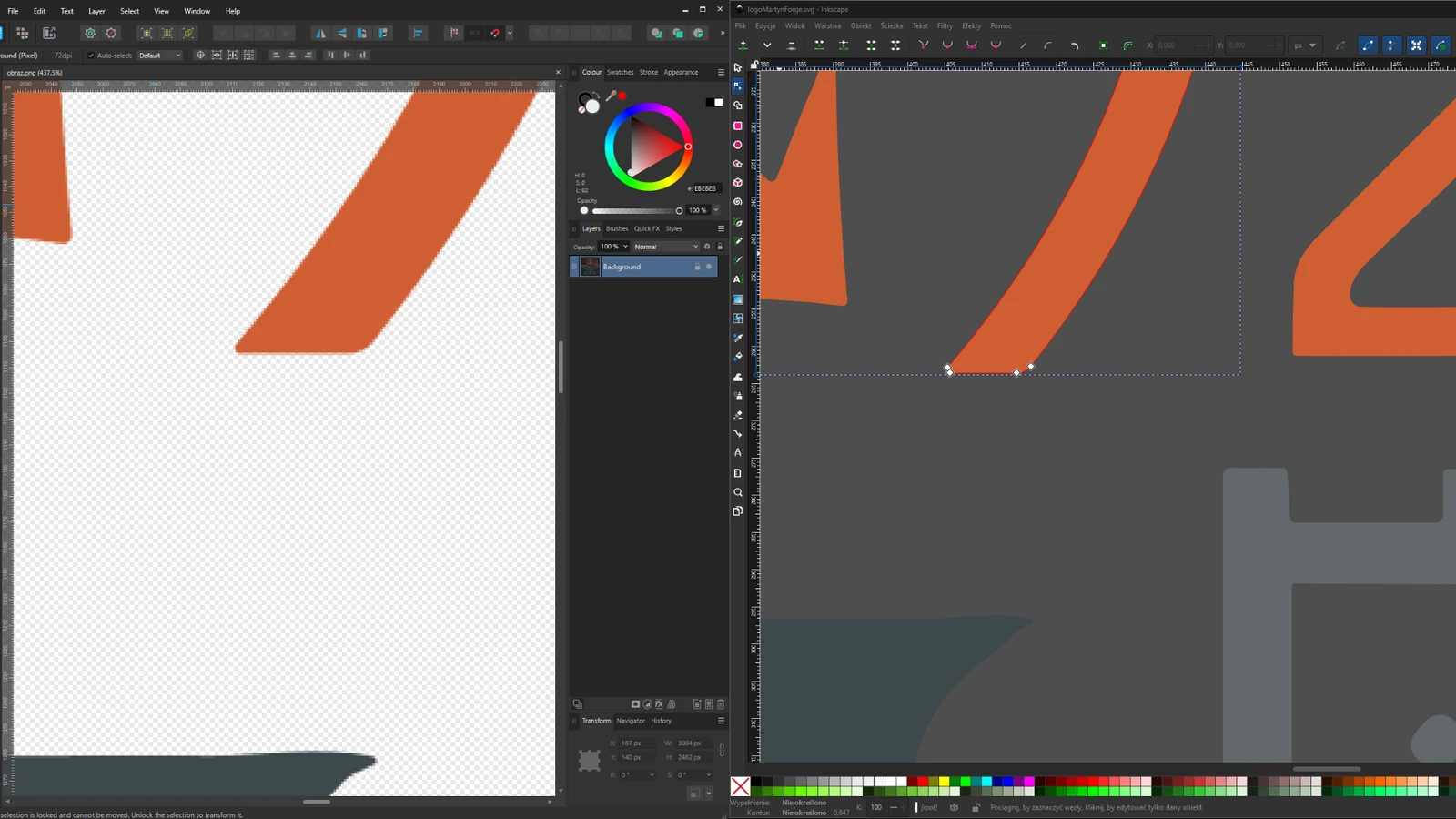
Vector graphics are made from mathematically described shapes. That sounds technical, but the practical result is simple: circles remain circles, lines can be edited, colours can be changed and one clean source can produce many different output files.
- the mark can be used from a small icon to a large sign;
- individual shapes can be corrected without rebuilding the entire image;
- a printer or another designer can prepare new applications;
- PNG files can be exported in any required size;
- the logo is easier to keep consistent across future uses.
“vector” does not automatically mean “well designed”. A bad logo saved as SVG is still a bad logo — it is simply a very sharp bad logo.
When is PNG genuinely enough?
PNG is not an amateur or inferior format. It is simply a final image with a defined size, and that can be exactly what a project needs.
PNG can be enough when the logo is needed for:
- a simple website;
- social media profiles;
- an email signature;
- a presentation;
- small digital materials;
- a temporary project identity;
- testing an idea before a larger investment.
a small company needs one clean mark for its website and Facebook page, is not planning vehicle graphics or print yet, and accepts a tightly limited revision process.
The important part is honesty about the deliverable: size, transparency, light or dark versions, revision limits, and whether the mark can later be rebuilt or developed as a vector.
It can be an excellent starter product when its limits are explained clearly.
When do you need SVG?
SVG becomes important when the logo needs to move beyond one screen and one fixed size. It is worth having when you plan to use the mark on printed material, signage, vehicles, workwear, vinyl cutting, embroidery, applications, interfaces, animation or several colour variants.
if you do not yet know where the logo will be used next year, a proper vector source is the safer choice.
SVG is also valuable as a source file. A printer may later ask for PDF, while a platform may only accept PNG. Both can be produced from a clean vector master.
Does SVG have no limitations?
A simple vector mark can be scaled without losing quality, but SVG is not a magic ticket for every machine and every workflow.
- not every application accepts SVG directly;
- some printers request another production format;
- photographic textures and very complex effects do not always belong in a simple logo;
- some production processes need a specially prepared file;
- fonts should be handled correctly or converted to shapes;
- the SVG itself still needs to be built cleanly.
Why can’t you simply “save as SVG”?
Software can often export something with an .svg extension. That does not automatically mean you now have a clean, usable vector logo.
Automatic tracing can leave hundreds of unnecessary points, rough edges, tiny artefacts, inconsistent spacing, distorted letters and shapes that are painful to edit later.
Manual clean-up means simplifying shapes, aligning lines, correcting proportions, rebuilding letters where necessary, checking spacing, testing the logo at small and large sizes and preparing usable final files.
What does a simple starter package give you?
At this level the product should be simple, clearly limited and quick to deliver.
- a short questionnaire instead of a long consultation;
- one visual direction;
- one main proposal;
- basic manual clean-up;
- a transparent PNG file;
- a version for a light or dark background;
- one small correction round;
- no SVG and no extended identity system.
This works for a company or project that wants to look tidy at the start but does not yet need the full process.
It is a fast mark for basic digital use.
With such a limited scope it is not realistic to promise five concepts, unlimited changes, full manual development, a complete vector master and a system for every future use.
You can promise it, of course. The internet is very tolerant of promises. Working hours are less flexible.
What does a full vector logo give you?
Here the client is not only buying a quick image. They are buying consultation, direction, manual refinement and files prepared for broader reuse.
- a conversation or more detailed brief;
- two visual directions;
- one selected direction developed further;
- manual construction and refinement;
- up to two organised revision rounds;
- SVG source file;
- PNG exports in useful sizes;
- light and dark background versions;
- a one-colour version;
- a basic colour palette;
- an icon or simplified mark where the design needs one.
This is still not a multi-week brand strategy or a complete corporate identity manual. It is a solid logo for a small business: thought through, cleaned up by hand and delivered in formats that can travel much further.
What if the client wants to “keep trying until it feels right”?
Logo design needs space for feedback, but it should not become an endless experiment. Unlimited revisions make the price unrelated to the work, blur the direction and encourage every new thought to become another version.
A healthy process states how many directions are created, which direction is chosen, how many revision rounds are included, what counts as a small correction and when a change becomes a new direction with additional work.
Where does AI fit into this?
AI can be very useful at the beginning: exploring associations, testing visual moods, creating rough concepts, comparing directions and helping a client see what their words might look like.
It does not automatically solve poor lettering, accidental geometry, excessive detail, similarity to existing marks, weak performance at small sizes or the lack of a clean vector master.
AI can accelerate exploration. The final mark still has to be selected, simplified, corrected and prepared for real use.
In a starter product AI can play a larger role because the client is buying a deliberately limited result. In a vector package the generated direction is only the beginning; the value lies in selection, interpretation, correction, vectorisation and the final file system.
Is a generated logo legal and unique?
There is no single answer for every generator. Before commercial use you should check the licence, whether commercial use is allowed, who receives rights to the output, whether stock icons or library elements were used, and whether a confusingly similar mark already exists.
a designer can perform a basic check and avoid obvious similarities, but a full legal trademark search is a separate specialist service.
A logo does not need to tell the entire company story
One common mistake is trying to place everything into one mark. A construction company wants a house, hammer, roof, spanner, initials, founding year and city skyline. A technology company wants a chip, brain, lightning bolt, globe and something that “shows the future”.
The more meanings you force into one small mark, the harder it becomes to read and use.
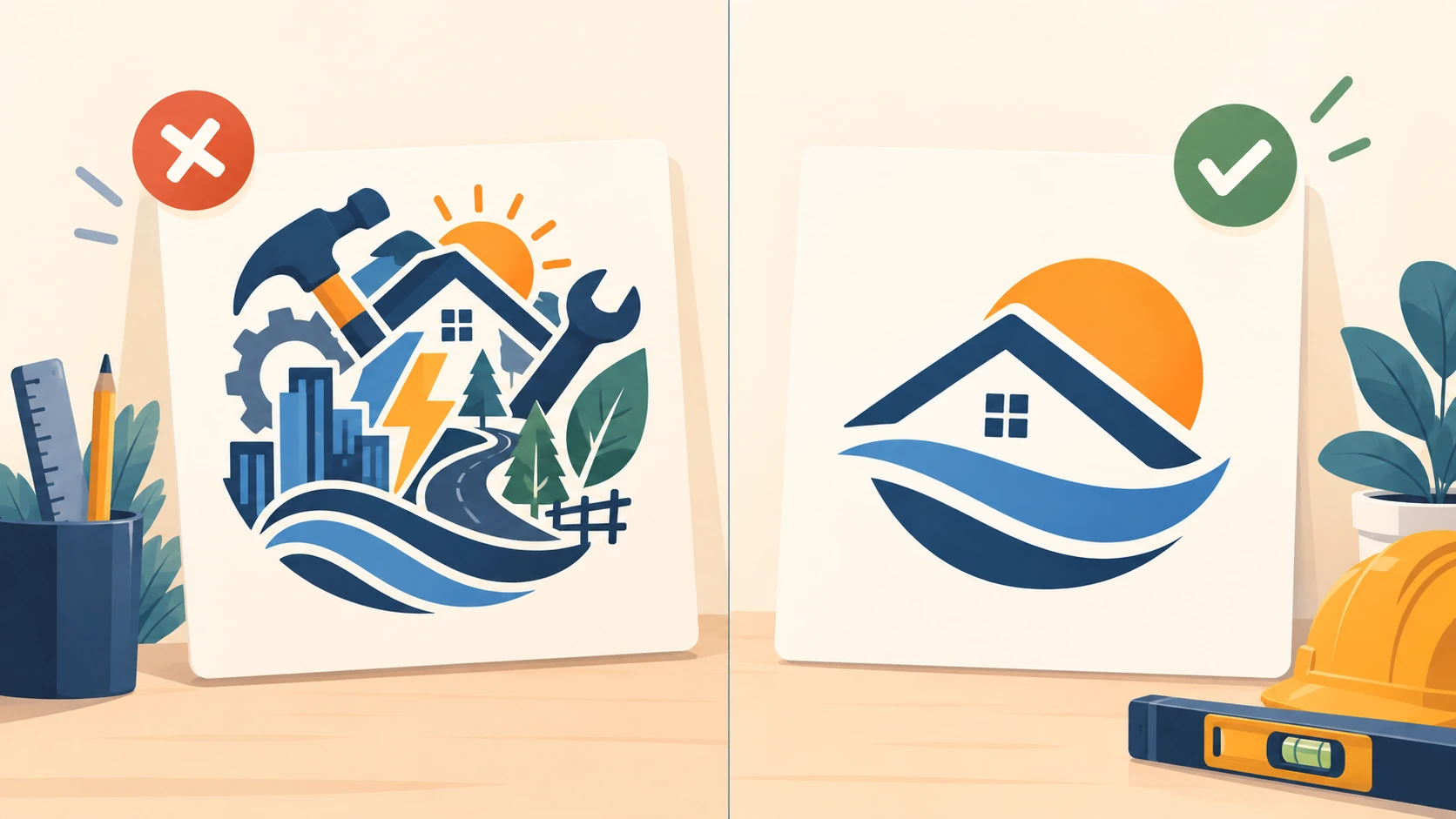
The fuller story can be told by the company name, tagline, website, photography, colour system, language and supporting graphics. The logo is one part of the system, not the entire communications department compressed into a square.
When do you need more than a logo?
If the company needs to look consistent across many places, it may need a visual identity rather than only a logo.
That can include a primary logo, simplified mark, horizontal and vertical layouts, colour palette, typography, usage rules, icons, social templates, business cards, website assets and a short brand guide.
It is a system that helps a company look like one brand regardless of where the material appears or who prepares it.
That scope should be priced separately. It should not be squeezed into a basic vector-logo package simply because every item happens to use the same mark.
How do you choose the right level?
you need a simple mark for digital use, the project is new, the budget is limited and the future use is still narrow.
the company is meant to last, you plan print, clothing, signage or vehicle graphics, or you want reliable future exports and edits.
you need a coherent system across the website, social media, print, advertising and materials prepared by several people.
The important thing is knowing when the mark is temporary and what rebuilding it properly later may involve.
What should you receive when the project is finished?
The exact package varies, but you should know which files are included, whether PNG has transparency, whether light and dark versions exist, whether you receive SVG, whether a one-colour version is included, which colours and fonts were used, what usage rights you receive and whether the files are archived.
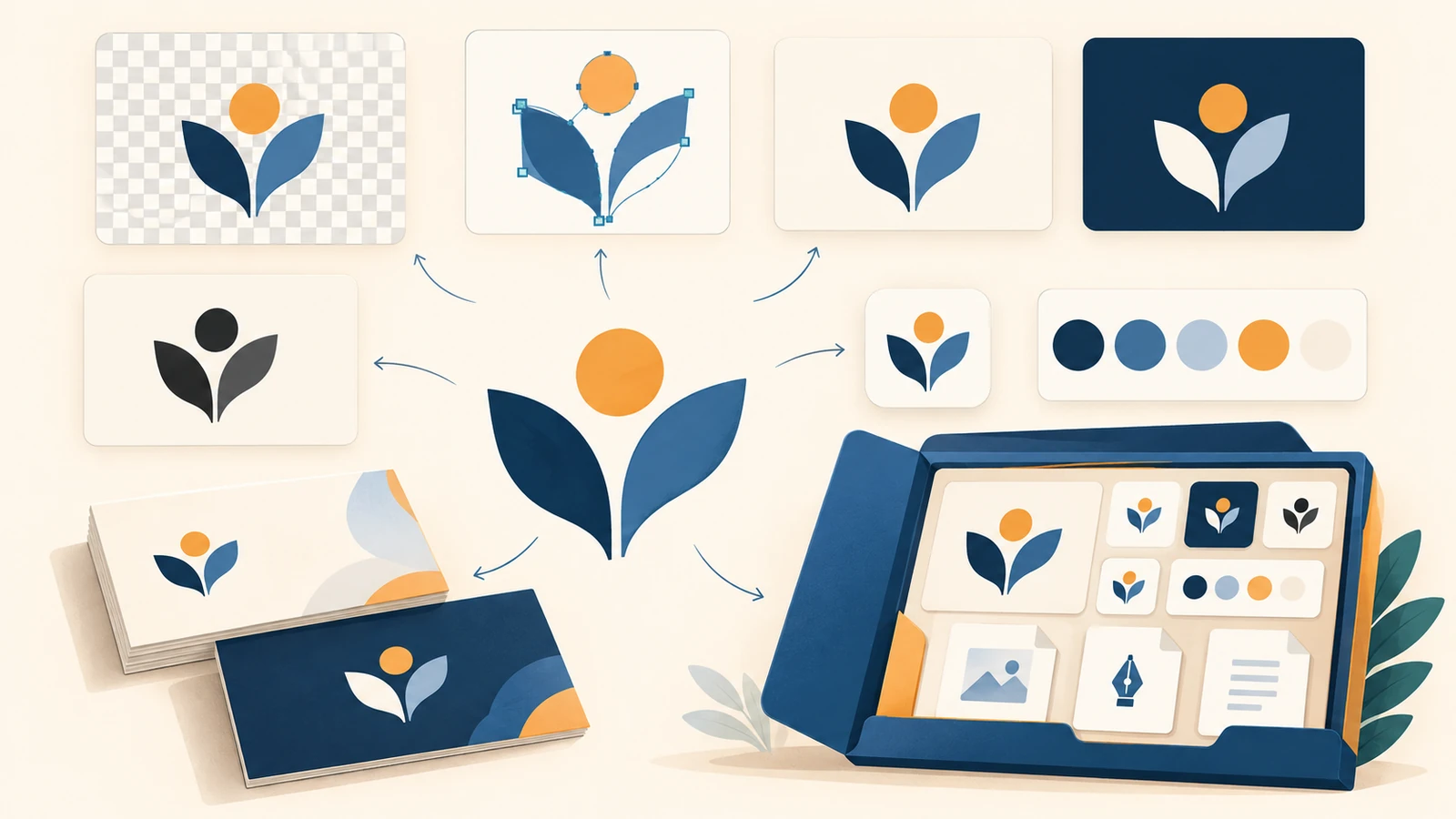
six months later, the client should not be searching a messaging app for “the good logo” somewhere between a lunch photo and a message saying “maybe make it more modern”.
Five questions before ordering a logo
- Where will the logo be used now and later?
- Do I only need PNG, or do I also need an SVG source?
- How many directions and revision rounds are included?
- Which versions and formats will I receive?
- Am I buying a quick starter mark, a full logo or a complete visual system?
Those questions let you compare offers that look similar at first glance but may contain very different amounts of work.
A simple starter mark can be a fair offer. A developed vector logo can be a fair offer too. The problem starts when both scopes are sold as if they were the same product.
Conclusion: you are not buying three letters after a dot
PNG is a finished image for defined uses. SVG is a flexible shape-based source that can be scaled, edited and used to prepare further files.
The price difference therefore does not come from some special permission to type “SVG”. It comes from the conversation, number of directions, selection, manual refinement, revisions, testing, file preparation and responsibility for making sure the mark still works when it leaves today’s screen.
Not sure whether you need PNG, SVG or a complete visual system?
Tell me where the logo needs to work. You will get a clear answer on whether a quick starter mark is enough or whether it makes sense to prepare a vector version from the start.
Read next
What kind of website does your business really need?
From a simple business presence to a digital system — how to choose the smallest sensible scope.
How MartynForge protects your business website
Bots, forms, encryption and DNS explained without unnecessary technical noise.